
Blog
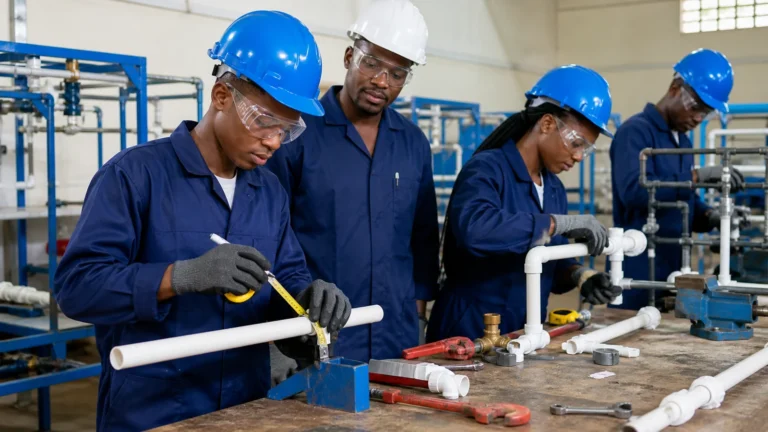
Plumbing Training in Cameroon: Practical Skills and Career Guide
What serious plumbing training should include—from safe installations and diagnosis to costing, customer service and enterprise.
Read article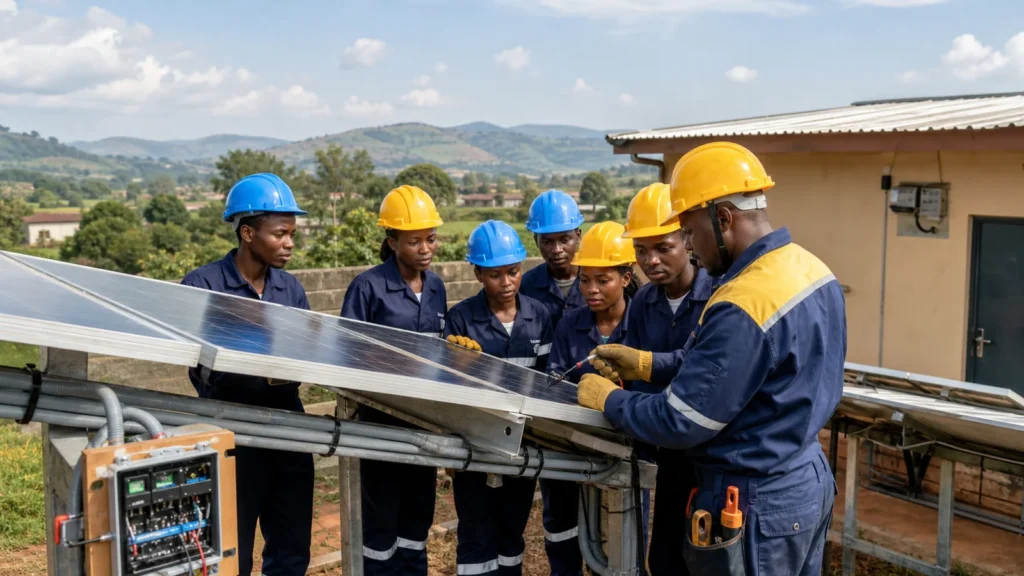
Short answer: Solar installation training in Cameroon should teach electrical safety, energy assessment, system sizing, component selection, installation, testing, maintenance and customer documentation. A useful course is hands-on and prepares learners to solve real power problems safely.
A solar technician may survey a site, estimate energy needs, help select panels and batteries, install mounting and wiring, configure protection, test performance and maintain the system. Good technicians also explain realistic system limits to customers and keep records.
The Afritech Solar Engineering program is a practical CQP pathway for eligible learners.
Solar equipment can involve dangerous voltage, current, heights and heavy components. Training should use appropriate personal protective equipment, safe isolation procedures, suitable tools and supervised practice. Never learn high-risk installation by copying an unsupervised online video.
Trained learners can support installation companies, electrical contractors, maintenance teams, equipment suppliers, farms, institutions and community energy projects. With experience and proper business practices, some technicians build an installation or maintenance service.
Employers and customers value safe work, correct sizing, neat installation, troubleshooting and honest communication. Keep a portfolio of supervised training projects with diagrams, checklists, test results and photographs that do not expose customer data or unsafe practice.
The fields overlap. Strong electrical foundations improve solar work, while solar training adds knowledge of generation, storage and system sizing. Learners interested in both can compare Afritech’s Electrical Engineering and Solar Engineering pathways.
A well-structured program can start with foundations, but entry requirements vary. Confirm your qualification and the course sequence before applying.
Yes, after you develop competence, experience and responsible business systems. Accurate quotations, warranties, after-sales support and safe work are essential.
Online study can teach concepts, but installation requires supervised practical work with real equipment and safety procedures.
Next step: View Solar Engineering details and check the next intake.
What serious plumbing training should include—from safe installations and diagnosis to costing, customer service and enterprise.
Read article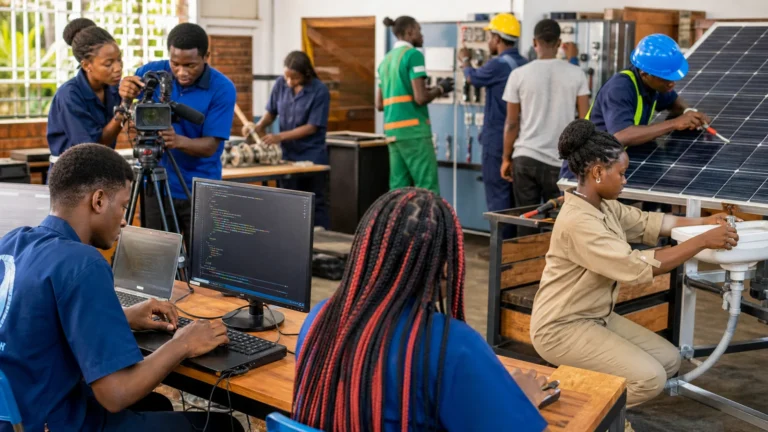
A source-informed guide to practical digital and technical skills connected to work, freelancing and enterprise in Cameroon.
Read article
How to choose practical fashion training that develops garment-making skill, a portfolio and the foundations of a real business.
Read article