

Blog
Best Computer Courses After GCE O Level in Cameroon
Computer courses after GCE O Level in Cameroon can build employable skills in web development, graphic design, office technology, digital marketing, hardware,…
Read article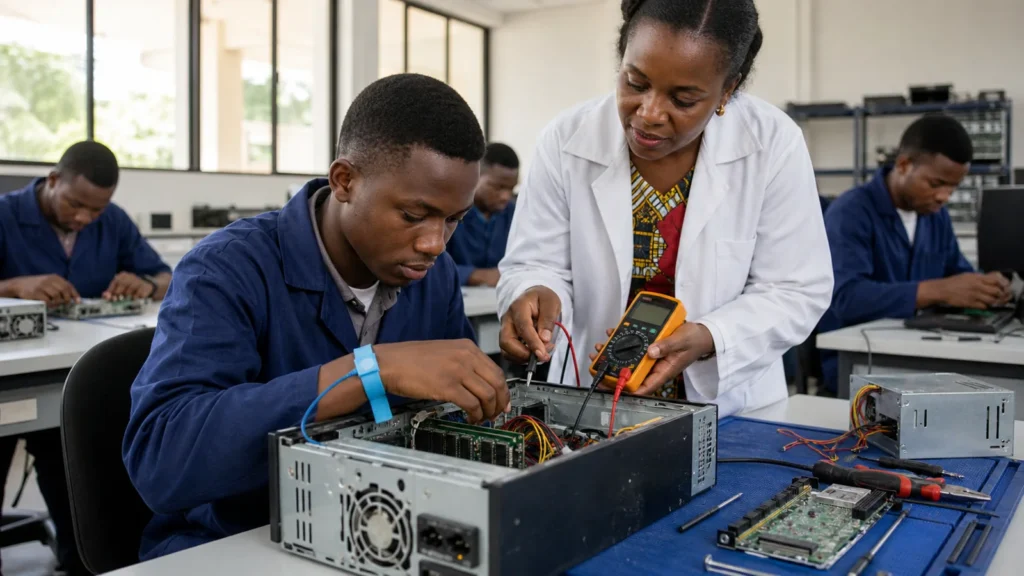
A computer hardware maintenance course in Cameroon should teach safe diagnosis, component handling, operating systems, preventive maintenance, basic networking and clear repair documentation. Replacing parts by guesswork is not professional troubleshooting.
MINESUP’s published HND results include Hardware Maintenance among official specialities. A school must still be authorized for the programme. HND admission and national examination rules differ from a short repair course or vocational programme.
Technicians should explain when repair is uneconomical or risks data. Honest diagnosis builds long-term trust.
Desktop maintenance foundations help, but board-level laptop or phone repair requires additional tools, soldering skills and safety. A course should state its scope honestly rather than promising mastery of every device.
Repair technicians may encounter personal files, passwords and business information. Access only what is necessary and authorized. Use documented backup procedures and never copy customer data for personal use.
Skills can support computer-repair, IT support, field-service, help-desk and junior systems roles. Self-employment requires honest estimates, inventory control, receipts, customer communication and safe handling—not technical skill alone.
You need repeated access to practice equipment. A good institutional lab can provide this during training.
It should include basic connectivity and troubleshooting. Advanced network administration is a separate, deeper path.
Yes. Organisations and households still need installation, upgrades, repair, support and safe device lifecycle management.
No. Business success also depends on trust, service quality, pricing, records and customer demand.
Next step: Compare network administration and Afritech programmes.
Source note: Reviewed on 21 August 2026 using MINESUP’s published HND specialities and standard safe-maintenance practice.
Computer courses after GCE O Level in Cameroon can build employable skills in web development, graphic design, office technology, digital marketing, hardware,…
Read article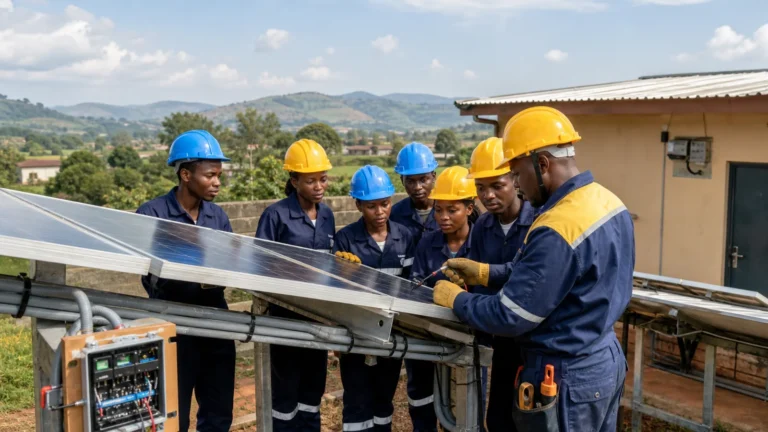
What practical solar training should cover, from safety and system sizing to installation, maintenance and enterprise.
Read article
Download all six 2026 Cameroon GCE and TVEE result and statistics PDFs, learn how to find a name or centre, and explore…
Read article