
Blog
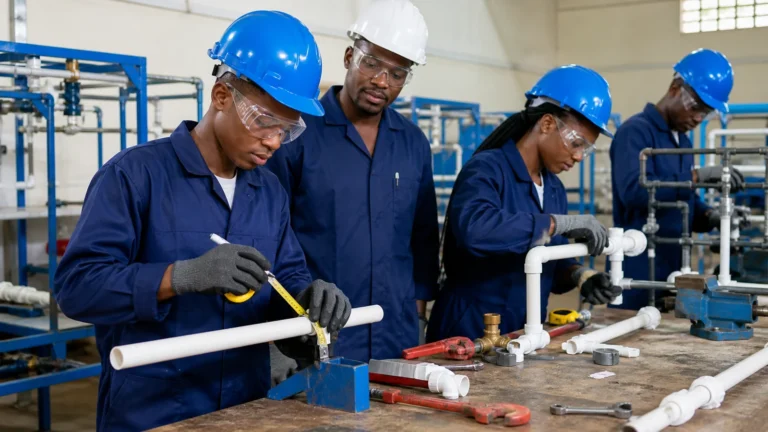
Plumbing Training in Cameroon: Practical Skills and Career Guide
What serious plumbing training should include—from safe installations and diagnosis to costing, customer service and enterprise.
Read article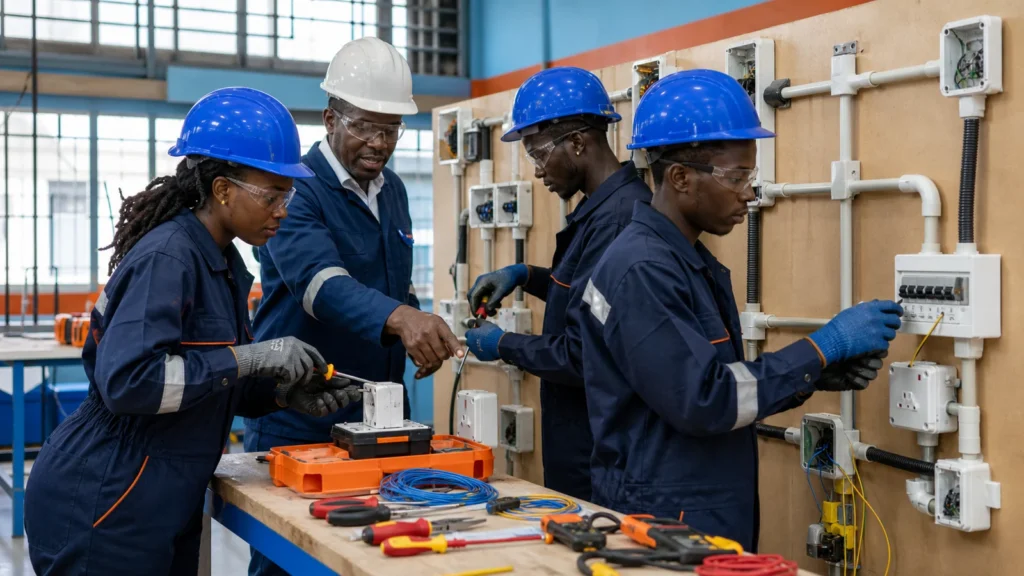
Short answer: Electrical installation training in Cameroon prepares learners to install, test, maintain and troubleshoot electrical systems safely. A credible course combines theory with supervised workshop practice, real tools, correct protective equipment and a recognized qualification pathway.
Electrical competence cannot be judged by a written note alone. Students should read diagrams, prepare circuits, make connections, identify faults, use test instruments and explain safety decisions under supervision. Repetition builds the habits that protect people and property.
The Afritech Electrical Engineering program follows a practical DQP pathway and states its current entry requirements online.
Graduates may work with electrical contractors, construction companies, maintenance departments, facilities teams, factories, institutions or energy businesses. With experience and appropriate professional practice, technicians may also offer installation and maintenance services independently.
As homes and businesses adopt solar and backup systems, electrical technicians benefit from understanding generation, batteries, inverters and integration. Learners who want to specialise can also compare the Solar Engineering program.
Document training projects with diagrams, materials lists, inspection checklists and test results. Photograph only safe, authorised work. A portfolio helps employers see your process and attention to detail, but it never replaces safety or supervised competence.
Some pathways accept O/L or equivalent entry. Requirements differ by institution and program, so check the published program details before applying.
It can be. Reliable technicians are needed for installation, faults and maintenance. Successful self-employment also requires accurate estimating, customer service, records and responsible safety practices.
Online material can support theory, but hazardous practical work should be learned in an equipped workshop with qualified supervision.
Next step: Review the Electrical Engineering course or compare all technical-trade programs.
What serious plumbing training should include—from safe installations and diagnosis to costing, customer service and enterprise.
Read article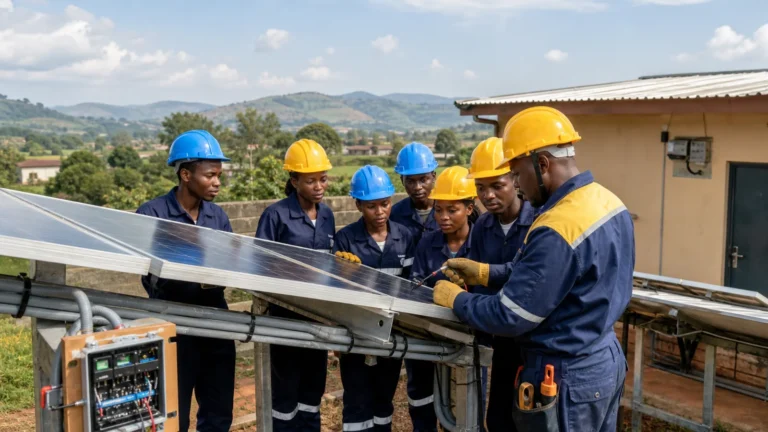
What practical solar training should cover, from safety and system sizing to installation, maintenance and enterprise.
Read article
How to choose practical fashion training that develops garment-making skill, a portfolio and the foundations of a real business.
Read article