

Blog
Video Editing Course in Cameroon: Skills, Tools and Career Path
A practical guide to choosing video editing training and building a showreel that can attract real clients.
Read article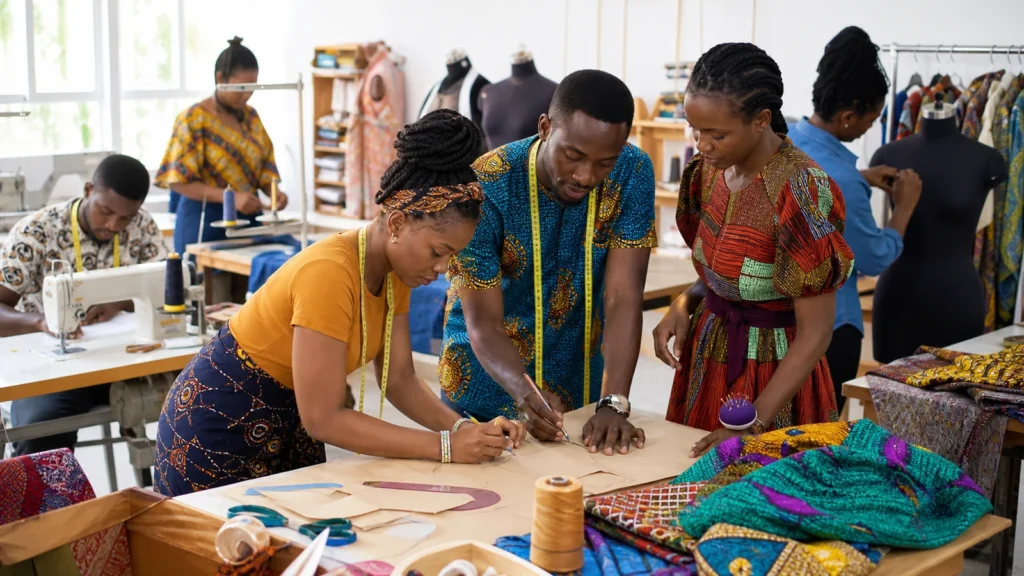
Good fashion design training in Cameroon should teach you to turn an idea into a well-fitted, properly finished and accurately costed garment. Creativity matters, but professional fashion also requires measurement, pattern work, construction, quality control, deadlines and customer care.
A tailor may reproduce or alter garments, while a fashion designer also develops concepts, silhouettes, collections and brand direction. In practice, successful professionals often combine design, sewing and business skills.
Your portfolio should show finished garments, inside finishing, pattern development, fitting corrections and different customer needs. Photograph work in good light and obtain permission before using a client’s image.
A small coherent collection is stronger than many unfinished pieces.
Graduates may work in tailoring, garment production, alterations, costume, bridal and event wear, uniforms, retail or their own label. Some specialize in pattern making, production supervision or fashion content.
Self-employment requires more than technical skill. Track material cost, labour time, deposits, revision limits, delivery dates and profit. Begin with a narrow offer and reliable quality.
Afritech’s Level 1 Fashion Design program is a one-year, two-semester CQP route with O/L entry. It sits within the Technical Trades faculty, where students complete practical workshop training and internships.
| Item | Published 2026/2027 information |
|---|---|
| Entry | O/L |
| Duration | 1 year, 2 semesters |
| Qualification route | MINEFOP CQP |
| Tuition | 240,000 FCFA |
| Technical practical fee | 40,000 FCFA |
| Next intake | 5 October 2026 |
Afritech’s current entry requirement is O/L. Other institutions may use different requirements.
A beginner program should start with tools and foundations. Interest, patience and repeated practice are essential.
Afritech publishes a MINEFOP CQP pathway. Confirm current registration and examination arrangements with admissions.
You can begin small when your quality is reliable. Test pricing and delivery with manageable orders before accepting complex work.
Next step: Review the Fashion Design program and apply for the October 2026 intake.
Currency note: Program information was checked on 27 August 2026. Confirm fees, tools and examination arrangements before payment.
A practical guide to choosing video editing training and building a showreel that can attract real clients.
Read article
A neutral comparison to help Cameroon students and parents choose between a practical vocational route and a university degree.
Read article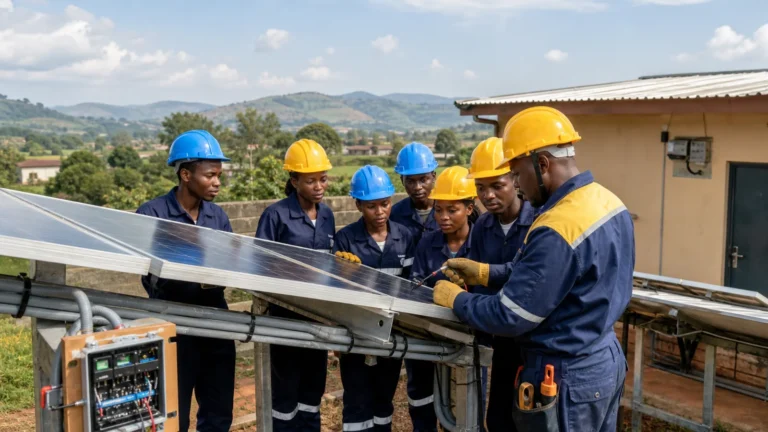
What practical solar training should cover, from safety and system sizing to installation, maintenance and enterprise.
Read article