
Blog
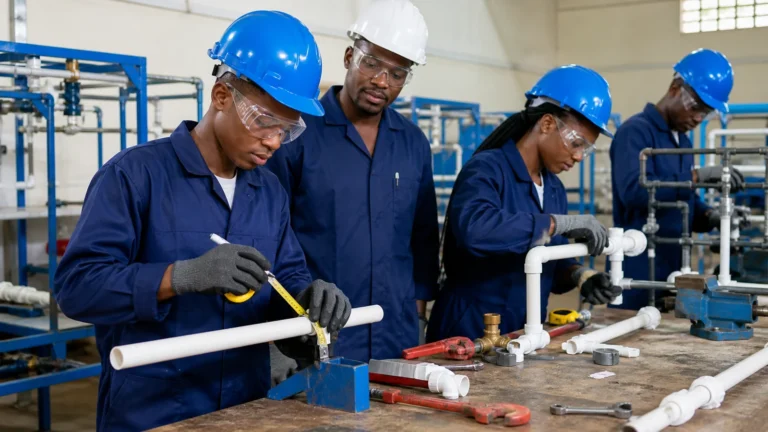
Plumbing Training in Cameroon: Practical Skills and Career Guide
What serious plumbing training should include—from safe installations and diagnosis to costing, customer service and enterprise.
Read article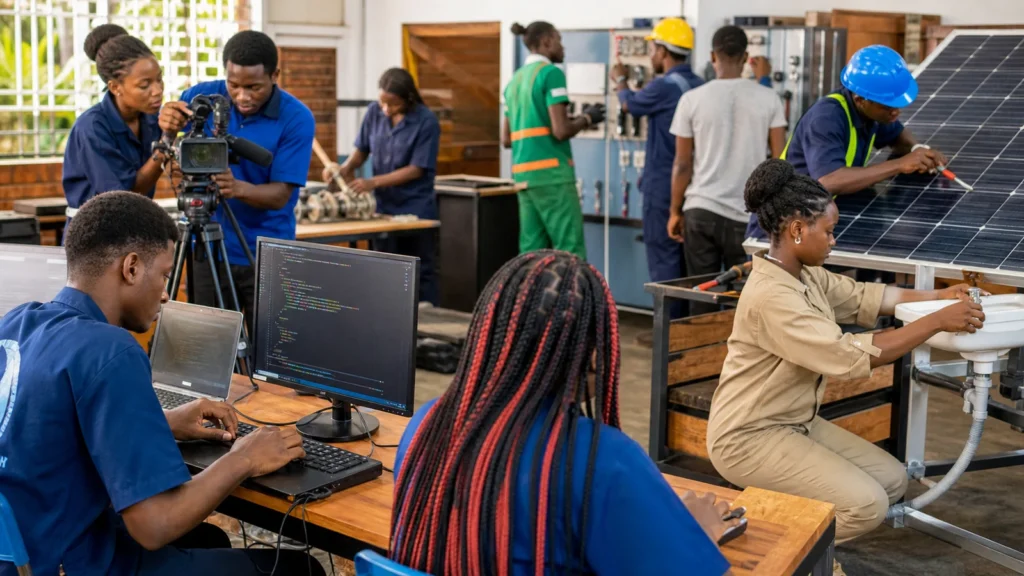
The most in-demand skills in Cameroon in 2026 are not defined by one viral list. Useful signals come from job advertisements, government training priorities, employer problems and services people already pay for. Across those signals, practical digital skills, infrastructure, communication and technical trades stand out.
Demand does not mean automatic employment. It means there are problems worth learning to solve.
A Cameroon remote-job dataset current in August 2026 lists Python, SQL, project management, AWS, AI, Excel, CI/CD, Kubernetes, TypeScript, React, JavaScript, Linux and data analysis among frequently requested skills. These are mostly international remote opportunities, so they show direction rather than the whole local labour market.
Cameroon’s MINEFOP JEME platform is simultaneously emphasizing career guidance, skills development, internships, entrepreneurship and training in digital, renewable-energy and telecommunications fields. Together, these sources support a practical mix of digital and technical pathways.
Businesses, schools, hospitals and public services need websites, databases, mobile tools and internal applications. Developers need programming fundamentals, databases, version control, testing, documentation and the ability to finish projects.
Start with Application Development or Web Development, then build several working applications that solve local problems.
As organizations depend on connected systems, they need people who can configure networks, manage accounts, maintain servers, monitor problems and protect data. Beginners should learn networking and operating systems before advanced security topics.
Afritech offers Cybersecurity and Linux at Level 1, with a related HND Computer Science and Network pathway for eligible learners.
Excel, SQL, dashboards, Python and AI tools help organizations turn records into decisions. The valuable skill is not pressing an AI button; it is asking a sound question, cleaning data, checking outputs and communicating a result.
Explore the existing guide to a data analysis course in Cameroon and Afritech’s AI and Machine Learning program.
Small businesses need customer research, content, advertising, search visibility, social-media management, online sales and measurement. A strong learner should be able to plan a campaign, create assets, track performance and explain what changed.
Combine marketing skills with a real business project rather than collecting tool certificates alone.
Brands, churches, events, schools and creators need visual communication. Useful skills include layout, typography, editing, sound, color, storytelling and delivery for different platforms. A portfolio is essential because clients buy what they can see.
Energy reliability and the cost of power make safe electrical and solar competence valuable. Training should include tools, measurements, system design, installation, troubleshooting and safety—not only theory.
Never perform electrical work beyond your competence or without the required supervision and protective equipment.
Construction, maintenance and personal services create local demand that cannot be outsourced to another country. These routes can support employment or small enterprise, but quality, punctuality, costing and customer trust matter as much as manual technique.
No course guarantees the highest income. Scarce competence, proof, customer value, location, experience and business ability all affect earnings.
Not universally. Digital work can reach remote clients; technical trades solve persistent local needs. Choose based on fit, demand and the quality of training available.
Yes, but build depth in one primary skill before stacking a complementary one. For example, video editing plus digital marketing or Linux plus networking can form a coherent combination.
Next step: Compare all Afritech programs by entry level and career pathway, then speak with admissions before choosing.
Source note: Reviewed on 27 August 2026 using the MINEFOP JEME platform, current Cameroon remote-job skill data and Afritech’s published programs. Job counts change and do not guarantee placement.
What serious plumbing training should include—from safe installations and diagnosis to costing, customer service and enterprise.
Read article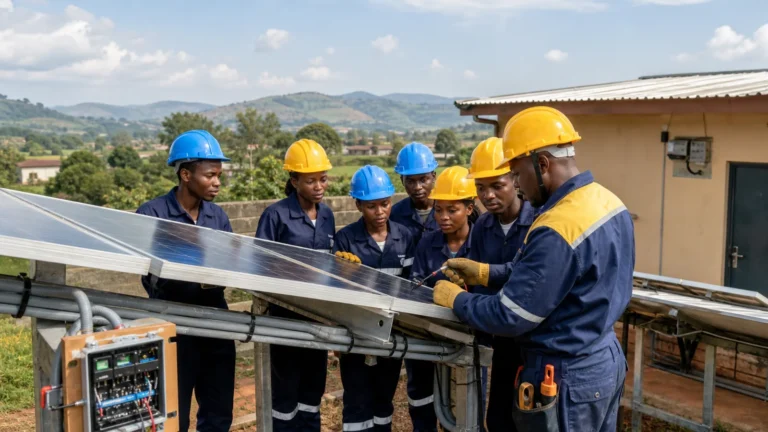
What practical solar training should cover, from safety and system sizing to installation, maintenance and enterprise.
Read article
Download all six 2026 Cameroon GCE and TVEE result and statistics PDFs, learn how to find a name or centre, and explore…
Read article